

Most chiropractic websites are expensive digital business cards. They look fine, they sit there, and they bring in almost zero new patients. If you’re about to build a chiropractic website, or rebuild one that has never sent you a single booking, this is the guide I wish every chiropractor read first.
I’m Jordan Sawaged. I’ve built over 1,000 websites across just about every industry you can think of, and today my company, Mile High Click, builds them almost exclusively for chiropractors. What follows isn’t theory. It’s the exact process we run every week to build a chiropractic website that ranks on Google and turns visitors into booked patients.
This is written for the chiropractor who already knows they need a real website and is deciding how to get it done right. Let’s get into it.
What you’ll learn:
- Start with strategy, not design
- The page-per-service architecture Google rewards
- Content that ranks (and the “About the Doctor” page)
- Conversion features that make the phone ring
- Internal linking that signals authority
- The real secret weapon: reviews & testimonials
- Real results: Tucson, top 3 in 2 months
- DIY or hire a specialist, and what it costs
- FAQ
Start With Strategy, Not Design
Before you pick a color or a template, answer one question: which patients is this website supposed to bring through your door?
Here’s the truth most web designers never understand about your business. A schedule packed with $40 insurance adjustments doesn’t pay the bills. The chiropractors I work with want the higher-value patients: cash-pay patients, and injury patients from car accidents and work (personal injury and workers’ comp), where a single case can be worth thousands instead of forty dollars. Personal injury isn’t for every practice, the payouts are bigger but they can take months to collect, so most clinics run a healthy mix. Add in your high-margin cash services like shockwave therapy, spinal decompression, and weight-loss programs, and that’s the patient base a smart website should be built to attract.
So the entire website gets engineered to rank for what those patients actually type into Google: injury chiropractor near me, injury chiropractor [your city], shockwave therapy near me, and so on. If your website isn’t built around those exact searches, it’s just a digital business card with a nicer font.
Build the Right Page Architecture (A Page for Every Service and Condition)
This is where almost every chiropractic website fails: it’s five pages. Home, About, Services, Contact, and maybe a blog nobody reads. That structure stopped ranking years ago.
With more practices opening every year, Google wants to see depth and authority. The fix is simple, but most people won’t do the work: build a dedicated page for every single service you provide and every condition you treat.
- A page for Auto Accident Injury Chiropractor
- A page for Sciatica Treatment
- A page for Shockwave Therapy
- A page for Spinal Decompression
- …and one for every other service and condition in your practice
Then you add two pillar pages that tie everything together: one that lists every condition you treat, and one that lists every service you offer, each linking out to its individual pages.
Done right, that often adds up to 30, 40, even 60 pages, but the page count isn’t the point, and filling your site with thin, copy-pasted pages will actually hurt you. What matters is that every service and condition gets its own genuinely useful page, written for a real patient searching that exact term. Each quality page is one more door into your practice from Google. Five generic pages give patients few reasons to choose you; thirty specific, well-written ones give them thirty.
Write Content Like a Human, Optimized for Google
Pages only work if the content is genuinely good: written for humans, optimized for Google, and specific to your practice. Thin, generic, copy-pasted content is worse than no content at all.
This is why, the moment a chiropractor hires us, we send a detailed questionnaire about their practice: their services, their story, the conditions they specialize in, and what makes them different. The more detail they give us, the better and more SEO-optimized the content. Vague answers in, vague content out. And vague content doesn’t rank.
Don’t Hide the Doctor
One of the biggest mistakes I see is a website that says nothing about the chiropractor or their experience. Google leans heavily on real expertise and trust to decide who to rank. A doctor with 30 years of experience should have a full “About the Doctor” page: studies, certifications, training, the whole story. Google absolutely weighs that, and so do patients deciding who to trust with their spine.
Turn Visitors Into Booked Patients
Ranking is only half the job. Once a patient is on the page, the site has to make booking effortless, or that hard-won visitor clicks your competitor instead.
Every site we build has a Request an Appointment form on every page: name, email, phone, and a note for the doctor. The second they submit, our system fires off both an SMS and an email confirmation. Not just an email, but both. Most practices stop at a basic contact form and then wonder why nobody books.
We also set the practice up with a dedicated business phone number for patient communication and marketing, then send automatic appointment reminders once the visit is booked, so patients actually show up. And a 24/7 AI chat assistant answers questions when your front desk is closed.
Click-to-call on mobile, clear “book now” buttons, and fast load times are non-negotiable. If a patient has to hunt for how to reach you, you’ve already lost them.
Internal Linking: The Silo That Tells Google You’re the Authority
Here’s a technical edge most DIY sites miss completely. Every page should link back through a clean structure: each condition page links up to your “all conditions” pillar page, which links back to your homepage. Every page on the site ultimately points home.
This silo passes authority through the whole website and tells Google your homepage is the center of gravity for “chiropractor in [your city].” It’s invisible to patients, and it makes a real difference in your rankings.
The Real Secret Weapon: Reviews, Testimonials, and YouTube
I’ll be honest with you: even a mediocre website with a strong Google Business Profile, solid reviews, and basic optimization can outperform the most expensive, most technical site ever built. That profile-and-reviews combination is that powerful.
Google reviews are one of the most powerful local ranking factors, and they’re the #1 thing a patient judges you on before they ever pick up the phone. So we automate it: after a patient finishes treatment, our system texts them asking for a Google review, and we coach you to have them mention exactly what they came in for (“came in for sciatica, walked out pain-free”). Reviews that name a real condition and your city genuinely help your rankings. Just never trade a discount or gift for a review, that breaks Google’s policy and can get your reviews stripped.
Then there’s the part most chiropractors ignore completely: testimonials. Testimonials are the gold sauce of this business. A single video testimonial from a happy patient, posted on your YouTube channel and embedded on your site, builds more trust than anything you could write about yourself, and it pulls double duty for visibility: those videos can surface in Google and YouTube results, and an active channel signals a real, thriving practice. It won’t outrank everything on its own, but paired with a solid site and a steady stream of reviews, it’s an edge most of your competitors never bother to build.
If your competitors have 100+ reviews and you have 20, you’ll keep struggling no matter how slick your site looks. Get active, especially on YouTube, and the difference is day and night.
Real Results: How a Tucson Chiropractor Hit the Top 3 in 2 Months
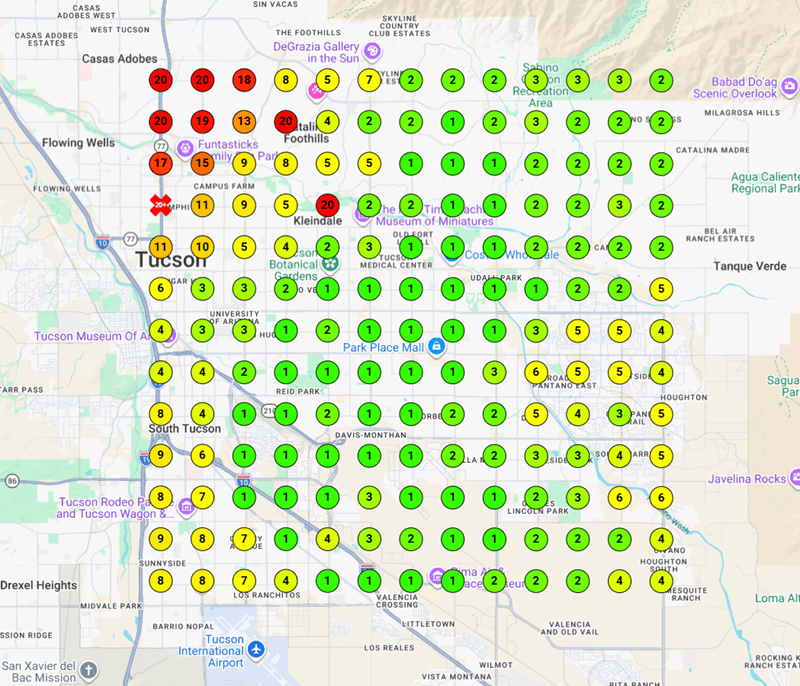
Here’s what happens when you build it right. Arizona Chiropractic & Spine Rehabilitation in Tucson came to us, we built their website on this exact blueprint, and within just two months of going live they were ranking in the top 3 for “injury chiropractor near me” and “chiropractor near me” across multiple areas in a five-mile radius around the practice.
See How Your Website Could Rank → Book a Free Call
DIY or Hire a Specialist, and What It Costs
Can you build this yourself? Technically, yes. But be honest about what it really takes: 40 to 60 pages of genuinely good, SEO-optimized content, conversion and automation systems wired together, a review engine running on autopilot, internal linking done right, and ongoing optimization every single month. Most chiropractors who try it end up with a half-finished site and a stack of wasted weekends.
That’s why we built three done-for-you packages:
- Growth Pack ($197/mo): 20-page website, fast hosting, free logo, Google + mobile optimization, sliding Google reviews section, automated review requests, appointment page with reminders, CRM and mobile app, and a 24/7 AI chat assistant.
- Authority Pack ($297/mo): everything above on a 30-page site, plus auto missed-call text-back, past-patient reactivation, and Google Business Profile optimization.
- Platinum Pack ($497/mo): everything above on a 40-page site, plus offsite SEO with backlinks and 350 local citation listings to dominate your market.
Every build starts with a Zoom call where I show you a live client’s website and its real rankings, then show you exactly what your website will look like before you commit to anything. If you like it, we get to work, and your new site is built and ready in 14 days.
Frequently Asked Questions
How much does it cost to build a chiropractic website?
Prices vary widely, from a few hundred dollars for a basic template to many thousands for a custom build. Our done-for-you packages start at $197/month and include hosting, SEO-optimized pages, review automation, appointment forms with reminders, a CRM, and a 24/7 AI chat assistant, so you’re not just buying a website, you’re buying a patient-generating system.
How many pages should a chiropractic website have?
There’s no magic number. You want a dedicated, well-written page for every service you provide and every condition you treat, plus two pillar pages tying them together, which usually lands somewhere between 30 and 60 pages. What matters is that each page is unique and genuinely useful, since thin or duplicated pages hurt more than they help.
How long does it take to build a chiropractic website?
Once you’ve completed the onboarding questionnaire about your practice, we build and deliver your new website in 14 days, then walk you through it on a launch call before it goes live.
Do I really need a website if I already have good Google reviews?
Reviews are incredibly powerful, and one of the biggest ranking factors for the map results. But reviews and a deep, well-built website feed each other: the site ranks your services and converts visitors, while reviews build trust and push you up the map. Together they dominate; alone, each leaves money on the table.
Can I build my chiropractic website myself on Wix or Squarespace?
You can, but the hard part isn’t dragging blocks around. It’s the 40+ pages of SEO content, the automation, the review engine, and the ongoing optimization. Most chiropractors don’t have the time, and a half-built site won’t rank. That’s the gap a specialist fills.
What’s the most important factor for ranking a chiropractic website?
There’s no single switch. For the map results, a fully optimized Google Business Profile (the right primary category, complete details, and steady reviews) does the heavy lifting. For the website itself, it’s quality content on a page per service and condition, plus clear expertise signals like a real “About the Doctor” page. Get the profile and the site working together and you’re ahead of most practices in your city.
Ready to Build a Chiropractic Website That Grows Your Practice?
You now know exactly how a chiropractic website should be built: the strategy, the architecture, the content, the conversion systems, and the reviews engine behind it. The only question is whether you build it yourself or hand it to a team that does this every day.
If you’d rather skip the wasted weekends, book a free Zoom call. I’ll show you a live client’s rankings and exactly what your website could look like. No pressure, no commitment.
Book Your Free Strategy Call →
About the Author
Jordan Sawaged is the founder of Mile High Click, a Denver-based agency that builds patient-generating websites for chiropractors nationwide. With a computer science background and 1,000+ websites built across nearly every industry, Jordan now focuses entirely on helping chiropractors attract more high-value patients with smart websites, automation, and local SEO.